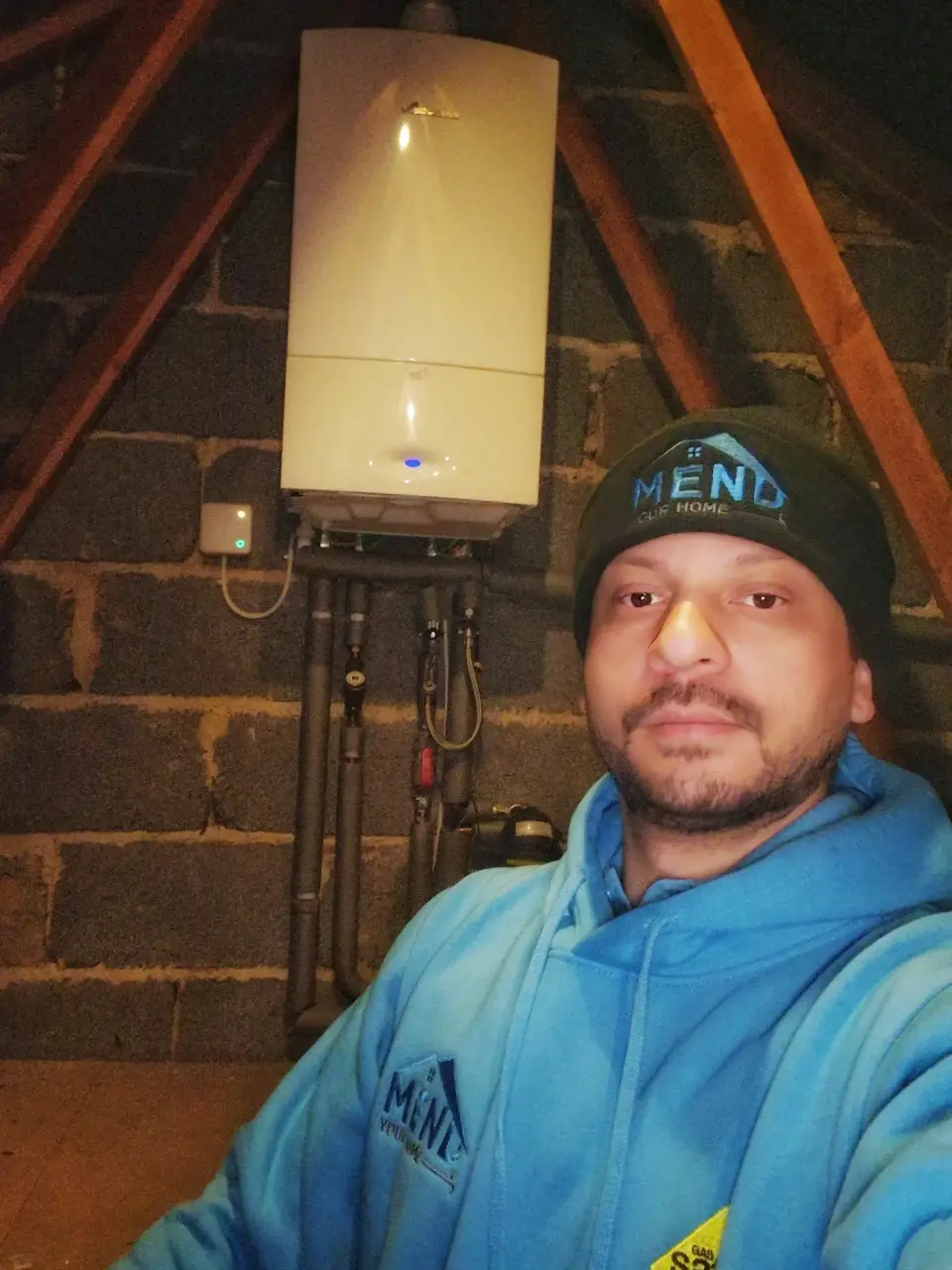
Boiler Installation
Fixed-price quotes, no hidden fees, and up to 18-year manufacturer guarantees on selected boilers.
Free fixed quote
We would like to use cookies to see how the site is used and whether our Google ads lead to enquiries. Nothing is set unless you accept. Cookie policy
Open 7 daysMon to Fri until 6pm, weekends 10am to 3pm

Services
Areas we cover
More
Heating
Radiators cold at the bottom means sludge, not air. Bleeding will not touch it. This will.
What you get
A powerflush is a deep clean of your whole central heating system. A specialist pump pushes cleaning chemicals and fresh water through the pipes, radiators and boiler at high velocity but low pressure. The speed of the flow shifts the sludge, rust, limescale and debris that build up over the years, and the machine carries it out of the system instead of leaving it to settle somewhere else.
It is often needed before a new boiler goes in, because many manufacturers want the system cleaned first for the warranty to stand.
Radiators cold at the bottom are the classic sign, but not the only one. Look out for:
We are Adey trained and use both methods. They do the same job in different ways and suit different systems.
High-velocity water and cleaning chemicals, with the direction of flow reversed to shift stubborn deposits from pipes and radiators. It breaks down blockages and removes heavy sludge. This is the one for heavily contaminated systems, blocked radiators and severe sludge problems.
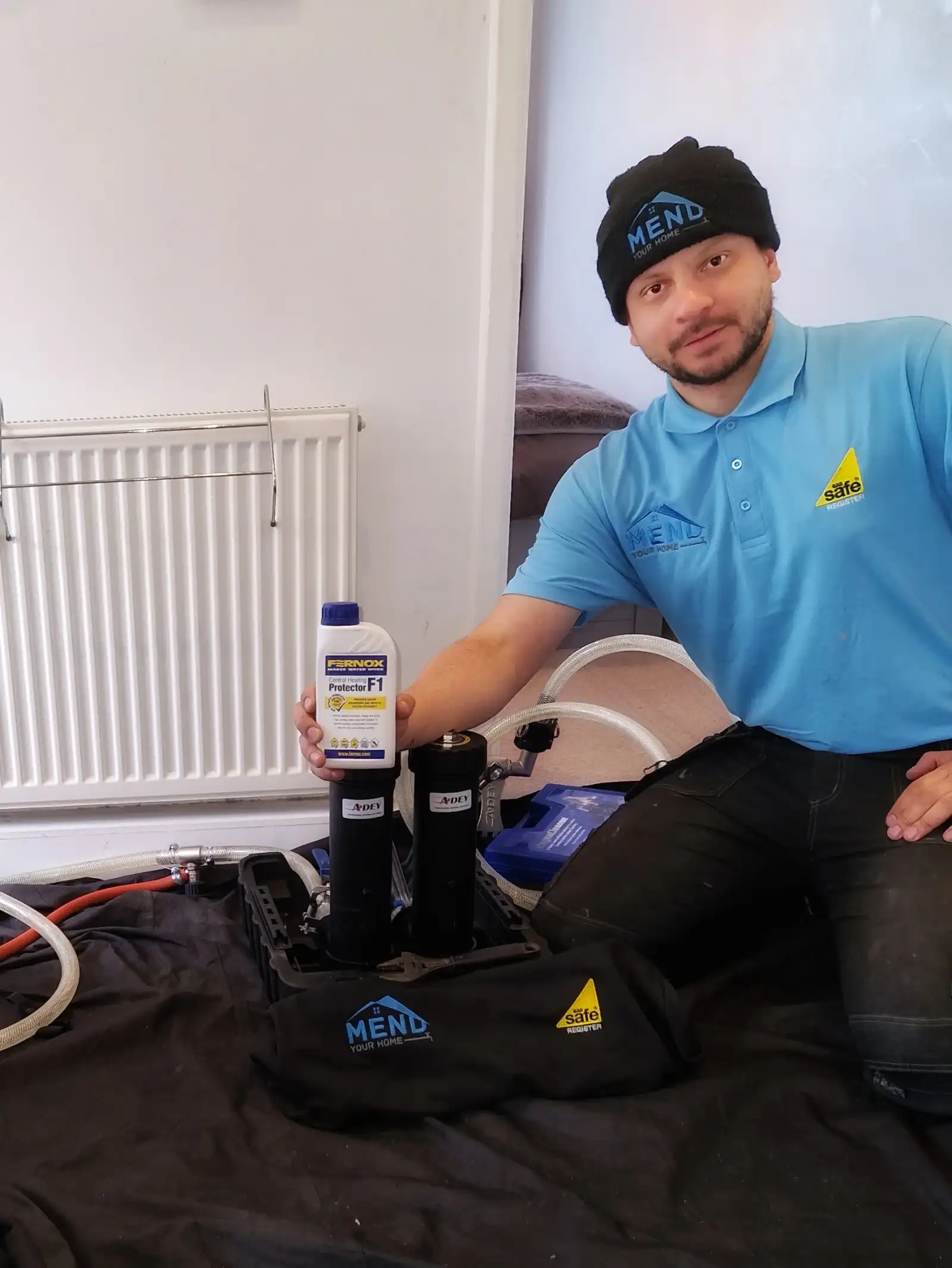
Adey’s magnetic cleansing process. A powerful magnetic filter captures the fine metal particles as the cleaning chemical circulates. It suits systems with moderate contamination, and it works well as routine maintenance and prevention.
We decide which your system needs after testing it, not before, and you get a fixed price for that method.
A magnetic filter, such as Adey’s MagnaClean, sits on the heating pipework and catches sludge and metal particles every time the heating runs. It protects the boiler from the debris that damages it, keeps the system running efficiently and stops the sludge you have just paid to remove from building up again. We recommend one on every system, and especially on any new boiler.
A powerflush does not create leaks. It can reveal weak points that were already there.
Before we start, we inspect the system and set the flow and pressure to suit its age and type. If anything concerns us, we talk it through with you first. If a leak does appear, we can usually repair it there and then, or give you a price for the work. Finding a weak joint during a planned visit is far better than finding it through your ceiling later.
A flush clears the problems caused by sludge and debris: cold spots, noisy running and wasted heat. It will not fix a component that has already failed, such as a broken pump or a faulty radiator valve. If we find one, we tell you and price the repair separately. Our guide to how a powerflush works covers the process in more depth.
How we do it
We check radiator temperatures top and bottom, take a system water sample and confirm sludge is actually the problem before selling you a flush.
The MagnaCleanse rig connects to the system and specialist cleaner goes in to break the magnetite and scale down.
Each radiator is isolated and flushed in turn with the magnetic filter capturing the debris. This is the part cheaper operators skip.
Clean water rinse until it runs clear, then inhibitor goes in. We check the radiators heat evenly before we pack up.
Proof
Thank you Myron. Absolutely fantastic, Myron came round at short notice to install a new boiler filter and flush the boiler and radiators using adey magnacleanse. Very polite, professional and reasonable price. Thanks
Power flush. Myron was very communicative and helpful with all questions about the job. Did a great and thorough job of cleaning my central heating system and identified some potential future issues for me…
Radiator Valve review and fix. Spent all day checking and fixing the radiators and went above and beyond to support when something wasn’t working or we needed to be creative.
Based in Crawley and covering the towns below. Pick yours for local detail, or just call and we will confirm we cover you.
Questions
The clearest sign is radiators that are hot at the top and cold at the bottom. That is sludge settling, because magnetite is heavier than water. Other signs are radiators that take a long time to warm, some that never get hot at all, a boiler making banging or kettling noises, and heating bills climbing without any change in usage. Cold at the top is a different problem and usually just needs bleeding.
Four to eight hours for an average home. You can stay in the house. We need access to every radiator and to the boiler, there is some pump noise, and we cover floors and clear up afterwards.
Typically £400 to £780 for an average three bedroom property, depending on the number of radiators and the condition of the system. Set that against a replacement heat exchanger at £400 to £600, or a new boiler at £1,600 upwards, and it is inexpensive protection.
Chemicals on their own loosen sludge but do not remove it, so it relocates and blocks something else, often the boiler heat exchanger or a pump. Draining and refilling only takes out what drains. Neither clears the pipework. The mechanical flush is the part that does the work.
With inhibitor topped up at every annual service and a magnetic filter fitted and cleaned yearly, a flush should last five to six years and many systems never need a second one. Without that protection, sludge can be back within two to three years.
Related
Fixed-price quotes, no hidden fees, and up to 18-year manufacturer guarantees on selected boilers.
Annual Gas Safe servicing that keeps your warranty valid and catches problems before they strand you in January.
 Emergency
Lockouts, error codes, pressure loss and no hot water. Diagnosed properly and priced before we touch anything.
One call, a straight answer on price, and a date in the diary. No pressure and no hard sell.