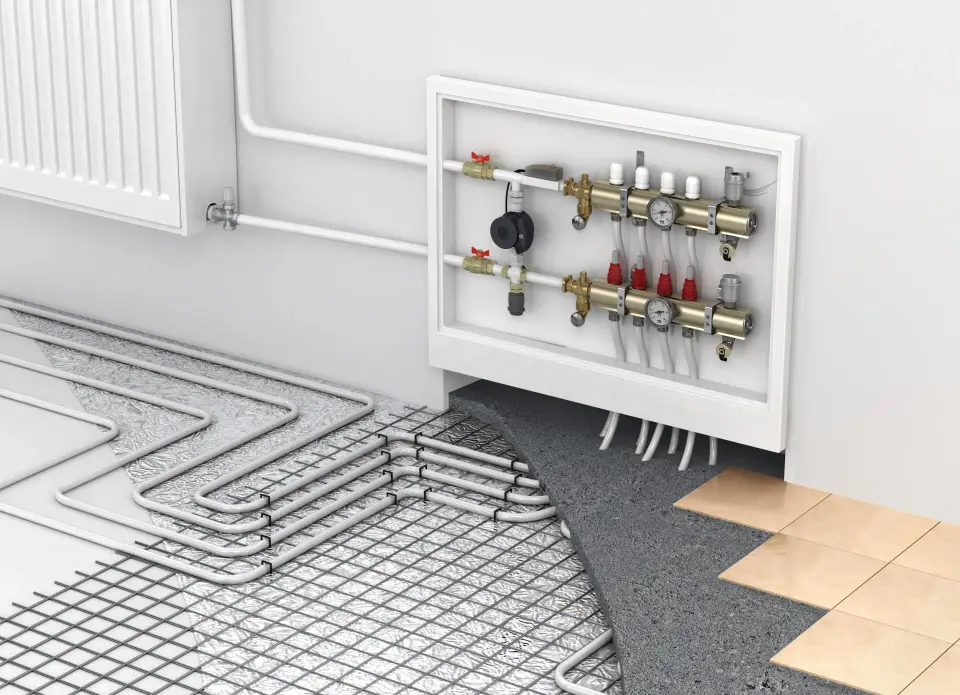
Underfloor Heating
Wet underfloor heating, designed and balanced properly. New builds, extensions and retrofits.
Fixed price quote
We would like to use cookies to see how the site is used and whether our Google ads lead to enquiries. Nothing is set unless you accept. Cookie policy
Open 7 daysMon to Fri until 6pm, weekends 10am to 3pm

Services
Areas we cover
More

Renewables
Designed properly for low-temperature heat, which is the difference between a heat pump that works and one that costs a fortune to run.
What you get
An air source heat pump takes heat from the outside air and moves it into your home. It uses the same refrigeration cycle as a fridge, run the other way round, and it keeps collecting heat when the air outside feels cold to you.
The unit runs on electricity, but most of the heat it delivers comes from the air rather than from the meter. That is where the efficiency comes from.
A ground source heat pump works on the same principle but collects its heat from the ground, through pipework laid in trenches or down a borehole. It needs more outside space and more groundwork, which is why air source is the usual choice for homes. We are qualified to install both, and we will tell you which one fits your property.
Most homes can run a heat pump. What changes from house to house is how much work is needed first.
Nothing on this list puts a heat pump out of reach on its own. It is the checklist we work through at survey.
A heat loss survey is how a heat pump gets sized properly. We visit, measure every room and note how each one is built: the walls, the floor, the ceiling, the windows and the insulation. From that we work out how much heat each room loses on a cold day.
That figure tells us three things. The size of heat pump the house needs. Which radiators can stay and which need to be bigger. And whether anything, such as insulation, should be done before the heat pump goes in.
While we are there, we also look at where the outdoor unit can sit, where a cylinder can go and how the pipework will run. You then get a system design with the equipment specified, an installation plan and a detailed quote.
A typical installation takes two to four days on site, depending on the property and how much radiator work is involved. You get the timeline at survey.
Heat pump efficiency is quoted as a COP, or coefficient of performance. A COP of 3 means three units of heat for every unit of electricity used, which is the same as 300 percent efficiency. A modern gas boiler turns a little over 90 percent of its gas into heat.
That sounds like an easy win, but a unit of electricity costs more than a unit of gas. So the comparison depends on what you are replacing:
A heat pump only reaches a good COP when it can run at a low flow temperature, which is why the radiator sizing matters as much as the unit itself. Our guide to air source heat pumps goes through the costs in more detail.
When a heat pump stops heating, or starts costing more to run than it should, the cause is usually on a short list. We find the actual fault before replacing anything.
Mitsubishi, Daikin, Vaillant, Samsung, LG, Panasonic, Worcester Bosch, Grant, Nibe and Viessmann, along with most other makes.
Most heat pump warranties need an annual service to stay valid. A serviced system also runs more efficiently and breaks down less often. A heat pump service with us covers:
Between services, keep the outdoor unit clear of leaves, snow and anything stacked against it.
Noise. Modern units are quiet, often compared to a quiet fridge. Where the unit sits matters more than the model, so we position it away from bedroom windows and neighbouring properties.
Cold weather. Modern heat pumps keep working well below freezing and are standard across Scandinavia, where winters are far harsher than ours. Efficiency drops in very cold spells, which is why the system is sized for the coldest days rather than the mild ones.
Lifespan. With an annual service, a heat pump should last 20 years or more.
Proof
After they installed a heat pump for my Dad, I was so impressed I got them to replace an ancient boiler in our home. Their price was great and the job was amazing. They explained everything afterwards and made…
Based in Crawley and covering the towns below. Pick yours for local detail, or just call and we will confirm we cover you.
Questions
Most properties can work with one, but the honest answer depends on insulation and radiator sizing. Heat pumps run at much lower flow temperatures than a gas boiler, around 35 to 50 degrees rather than 70. That means radiators often need upsizing and the property needs reasonable insulation. We do a full heat loss survey and tell you plainly what would be involved, including where it is not worth it yet.
It depends on your electricity and gas tariffs and on how well the system is designed. A well-designed heat pump delivers roughly three to four units of heat per unit of electricity. A badly designed one running at high flow temperatures to compensate for undersized radiators can easily cost more than gas. The design work is where the running cost is decided.
Related
Wet underfloor heating, designed and balanced properly. New builds, extensions and retrofits.
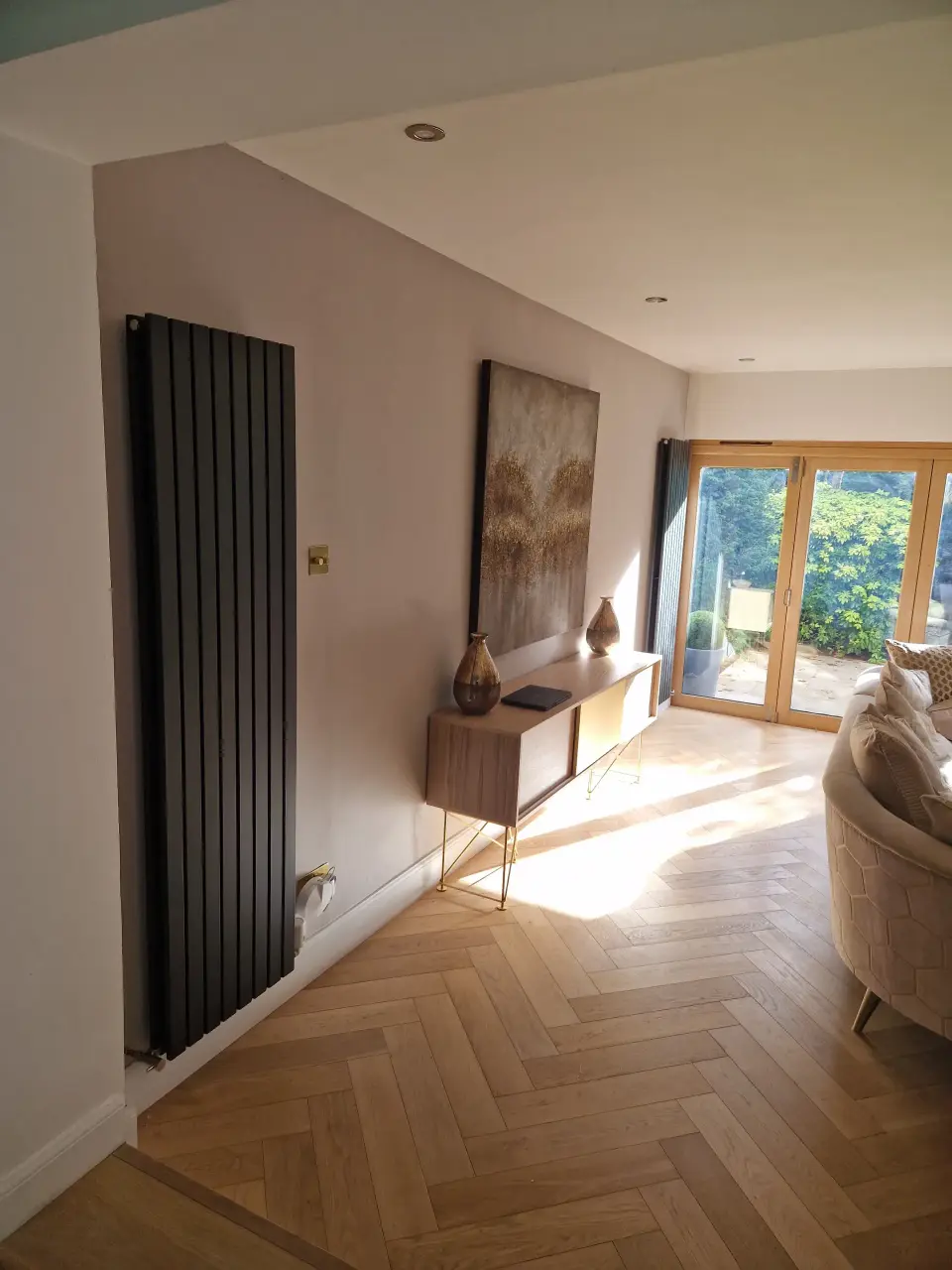
Hive, Nest and Tado fitted and configured. We also fix the ones that keep dropping offline.
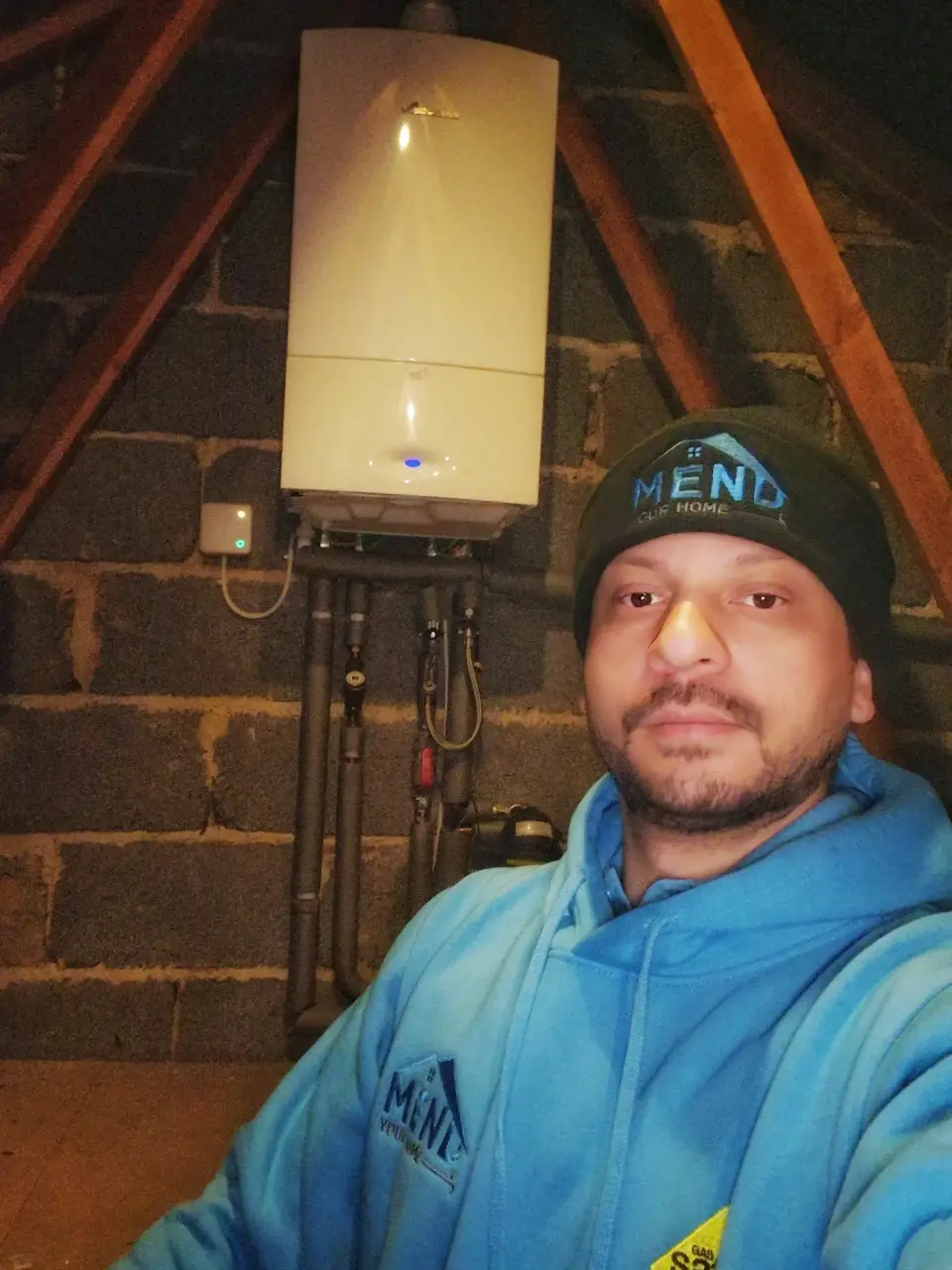
Fixed-price quotes, no hidden fees, and up to 18-year manufacturer guarantees on selected boilers.
One call, a straight answer on price, and a date in the diary. No pressure and no hard sell.